
Why Ride Share Apps Are Not Enough for Seniors in PACE Programs
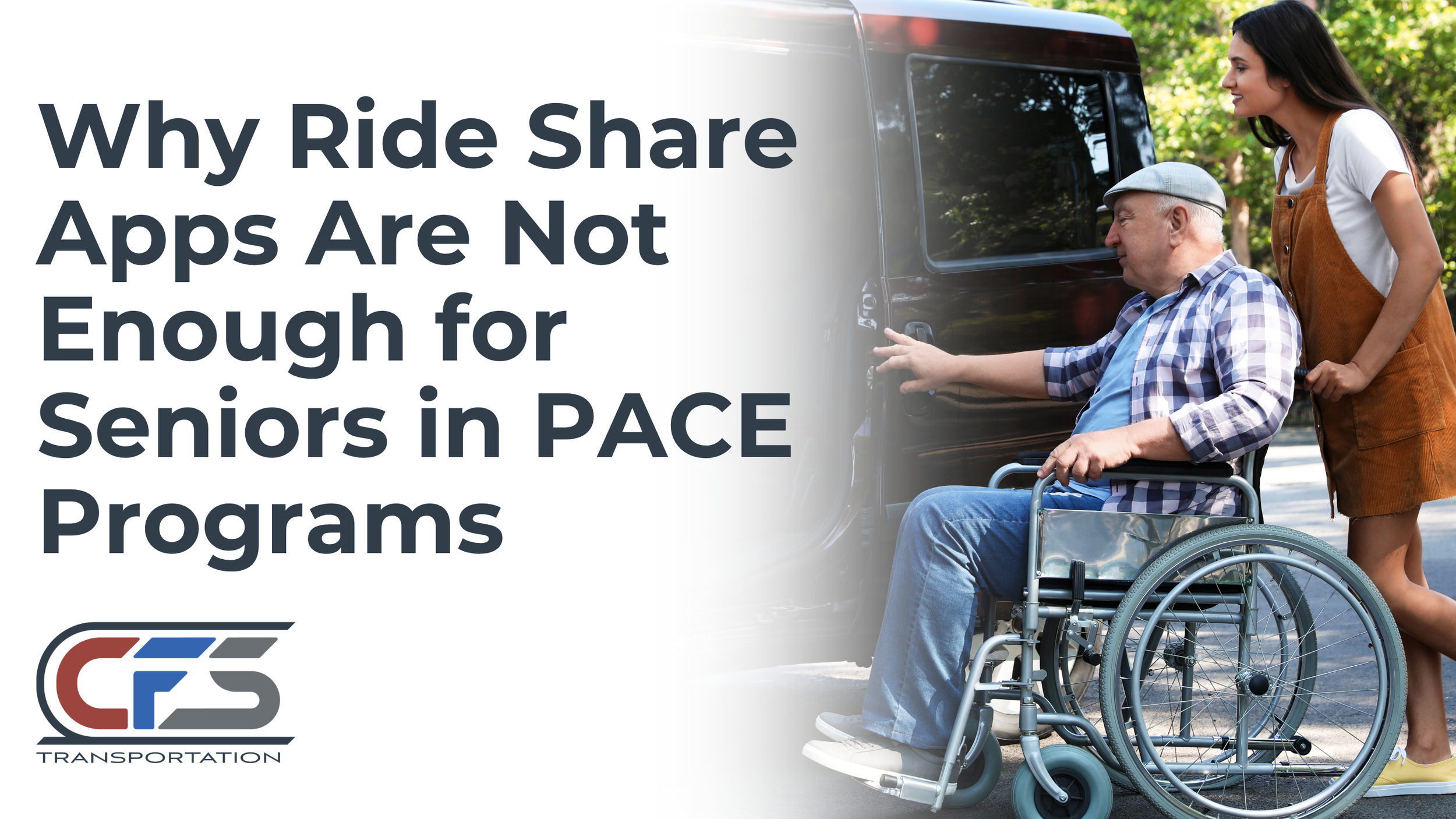
App-based rideshare services have changed the way many people get around. For healthy, independent riders, the convenience of requesting a ride from a phone can be helpful.
But transportation for older adults, individuals with mobility needs, and PACE participants is different.
In the Program of All-Inclusive Care for the Elderly (PACE), transportation is not just a convenience. It is part of the care model. Participants rely on transportation to access day health centers, medical appointments, specialists, therapies, and other services that support their health, independence, and quality of life.
When transportation is unreliable, delayed, or not equipped to meet a participant’s needs, the impact can extend far beyond a missed ride.
The Difference Between Convenience and Care
Traditional rideshare platforms are designed for independent passengers who can safely get to the curb, enter and exit a vehicle without assistance, and manage their own trip.
That does not always reflect the reality of PACE participants.
Many older adults may need support with mobility, wheelchair access, cognitive impairment, physical assistance, or time-sensitive medical appointments. For these individuals, transportation requires more than simply matching a rider with the nearest available driver.
Reliable non-emergency medical transportation requires the right driver, the right vehicle, the right communication process, and the right level of support.
Why Medical Transportation Requires a Different Standard
The term “non-emergency medical transportation” can sometimes be misunderstood. Non-emergency does not mean non-essential.
PACE participants may need transportation for:
Day health center attendance
Primary care appointments
Specialist visits
Dialysis appointments
Rehabilitation or therapy services
Follow-up appointments after hospitalization
Other approved healthcare-related services
A missed pickup, late arrival, or lack of proper assistance can create real disruption for participants and care teams.
For a PACE program, transportation is directly connected to access, coordination, and continuity of care.
Where App-Based Rides Can Fall Short
App-based transportation may work well for general transportation needs, but it is not always designed for the complexity of medical transportation.
Common concerns may include:
Drivers who are not trained in mobility assistance
Limited availability of wheelchair-accessible vehicles
Lack of coordination with healthcare teams
Inconsistent reliability for time-sensitive appointments
Unclear accountability when issues arise
No built-in understanding of participant care needs
For someone who uses a wheelchair, walker, or needs additional assistance, a standard rideshare vehicle may not be appropriate. For someone attending a time-sensitive appointment, a delay can affect the entire care schedule.
In PACE, transportation must support the care plan—not operate separately from it.
Transportation Delays Affect More Than the Participant
Transportation challenges do not only impact the person receiving the ride.
They also affect the care teams responsible for supporting that participant.
Research on transportation challenges among patients receiving in-center hemodialysis found that unreliable transportation can create emotional distress for patients, disrupt clinic workflows, and place additional coordination burdens on staff.
While dialysis is only one example, the lesson applies broadly: transportation is deeply connected to healthcare operations.
When rides are late, missed, or poorly coordinated, the effects can include:
Missed or shortened appointments
Delays in care delivery
Increased stress for participants
More follow-up work for staff
Disruption to daily care schedules
Reduced confidence in the transportation process
For PACE Programs, a reliable transportation partner helps reduce these disruptions and supports smoother coordination across the care team.
Why Transportation Should Be Treated as Part of the Care Team
PACE is built around coordinated, interdisciplinary care.
Transportation plays a direct role in that coordination. Drivers, dispatchers, and transportation teams are often among the first and last touchpoints in a participant’s day.
That makes communication, professionalism, and consistency essential.
A strong transportation partner should understand that every ride supports a larger care plan. This means coordinating with PACE teams, communicating proactively, and recognizing that participant experience matters from pickup to drop-off.
Transportation should not feel disconnected from care. It should operate as an extension of the care team.
What Reliable PACE Transportation Should Include
PACE programs need transportation partners that are built for the realities of serving older adults and individuals with healthcare needs.
Reliable PACE transportation should include:
Trained and professional drivers
Wheelchair-accessible transportation
Safe vehicle entry, exit, and securement processes
Proactive communication with care teams
Reliable recurring schedules
Same-day transportation support when needed
Local operational knowledge
Clear accountability and reporting
A participant-centered approach
The goal is not simply to complete a ride. The goal is to help participants access care safely, consistently, and with dignity.
What Makes CFS Transportation Different
CFS Transportation is a PACE-exclusive non-emergency medical transportation provider serving programs throughout San Diego County.
Unlike general transportation providers or app-based platforms, CFS is built around the needs of PACE programs and their participants.
Local San Diego Drivers
CFS uses local San Diego-based drivers who understand the region, traffic patterns, facility locations, and the importance of reliable timing.
Wheelchair-Compliant Transportation
CFS provides wheelchair-compliant transportation designed to support participants with varying mobility needs.
Proactive Communication
CFS prioritizes overcommunication so care teams are not left wondering about participant status, delays, or schedule changes.
Industry Standards and Protocols
CFS complies with industry standards and protocols to help ensure transportation is handled with professionalism, consistency, and care.
Built for PACE Programs
With more than 22 years of experience in the PACE industry, CFS understands that transportation is not separate from care. It is part of the participant experience and an important part of daily operations.
The Right Transportation Partner Protects Access to Care
For PACE programs, transportation decisions should not be based only on convenience.
The right transportation partner can help improve reliability, reduce disruptions, support staff, and ensure participants remain connected to the care they need.
App-based rides may be convenient for some situations, but PACE transportation requires a higher level of coordination, communication, accessibility, and accountability.
For older adults and participants with medical or mobility needs, transportation is not just about getting somewhere.
It is about getting there safely, consistently, and with the right support.
Partner with CFS Transportation
CFS Transportation works with PACE programs throughout San Diego County to provide reliable, wheelchair-compliant non-emergency medical transportation.
If your organization is evaluating transportation partners or looking to improve reliability, CFS Transportation is available for an initial consultation to discuss your program’s needs.
Learn more about CFS Transportation and its role in supporting PACE programs.
Sources
This article was informed by the following sources:
LTC News: “App-Based Medical Rides Put Older Adults at Risk: What You Need to Know”
Bonilla-Herrera, B., Saini, N., Corina, I., Dickerson, B., Grijalva, M. E., Pulido, D. J., Roshanravan, B., Fenton, J. J., Gottlieb, L. M., & Razon, N. “It’s Part of Dialysis”: Lived Experiences of Transportation Challenges Among Patients and Staff in In-Center Hemodialysis. Journal of Nephrology Social Work, 2026.